New therapeutic strategy for aggressive leukemia
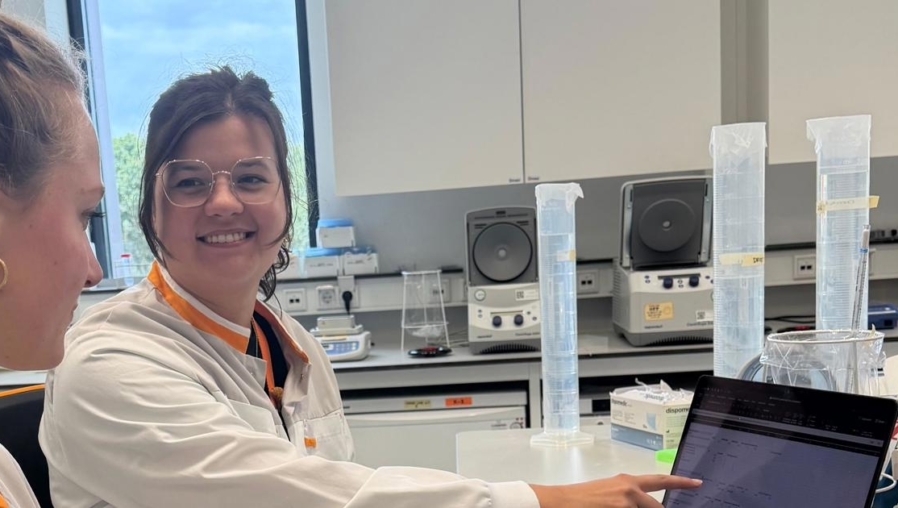
Researchers at the Princess Máxima Center have identified an innovative therapeutic strategy in the laboratory against an aggressive form of acute lymphoblastic leukemia (ALL). They also discovered how the mechanisms underlying this strategy work. This lays the foundation for further research into existing drugs that target this mechanism of action.
Acute lymphoblastic leukemia is the most common form of cancer in children. Each year, approximately 110 children in the Netherlands are diagnosed with this disease. Most children are cured, but for children with so-called TP53 alterations in their DNA, the outlook is often less favorable. Their leukemia cells respond less well to existing treatments, including chemotherapy and CAR T-cell therapy. Starting points for the development of new treatments are therefore urgently needed.
Researchers from the Van Leeuwen group at the Princess Máxima Center and the Faculty of Veterinary Medicine at Utrecht University discovered a new therapeutic strategy. They removed crucial building blocks from the leukemia cells and simultaneously disabled the cells’ repair system. This strategy was combined into two experimental drugs and subsequently tested in the laboratory.
Kari Grünewald is a PhD candidate in the Van Leeuwen group and conducted this research: ‘Leukemia cells with TP53 alterations often escape treatment. By simultaneously depriving them of essential building blocks and disabling their repair mechanism, we observed that the cells disappeared.’
The most important outcome of the study is the discovery of the underlying mechanism of action. The drug combination tested is not suitable for clinical use. Using this new knowledge, the researchers will now search for existing, already approved drugs that exploit the same pathway. This follow-up research is already being prepared.
Research group leader Dr. Frank van Leeuwen led the study together with Celia Berkers from Utrecht University: ‘This is preclinical research. We have not developed a new treatment, but we have identified a new target that brings the development of better treatments for children with this difficult-to-treat form of leukemia a step closer.’
The results of the study were recently published in the journal Hemasphere. This research was made possible through funding from the Dutch Cancer Society (KWF).
The study focuses on TP53-deficient acute lymphoblastic leukemia (ALL), a subtype that often responds poorly to existing treatments because the so-called p53 cell death pathway is no longer functional.
The researchers investigated the effect of the DHODH inhibitor Orludodstat. This drug disrupts nucleotide synthesis and cellular energy metabolism, processes on which rapidly dividing leukemia cells are highly dependent. Based on a drug screen, they combined Orludodstat with the ATR inhibitor Berzosertib. This combination proved effective against leukemia cells in cell models and mice, regardless of TP53 status.
To understand the underlying mechanisms, Dr. Marjolein Kes, a postdoctoral researcher in the Drost group, and Grünewald examined changes in the transcription and metabolism of leukemia cells. They observed that the metabolic disruption activates the so-called Integrated Stress Response. This forces the cell to produce the transcription factor ATF4. Under normal circumstances, this protein enables cells to adapt to temporary stress. However, prolonged activation by the combination therapy causes ATF4 to drive cells into ferroptosis, a form of cell death.
Thanks to the unraveling of the underlying mechanism of action, a follow-up study is now being launched. Van Leeuwen: ‘This provides leads for further investigation of existing, already approved drugs that influence the same stress pathway. And hopefully, in the future, to apply in the clinic what we have now discovered in the laboratory.’