Keep moving, important for children with cancer
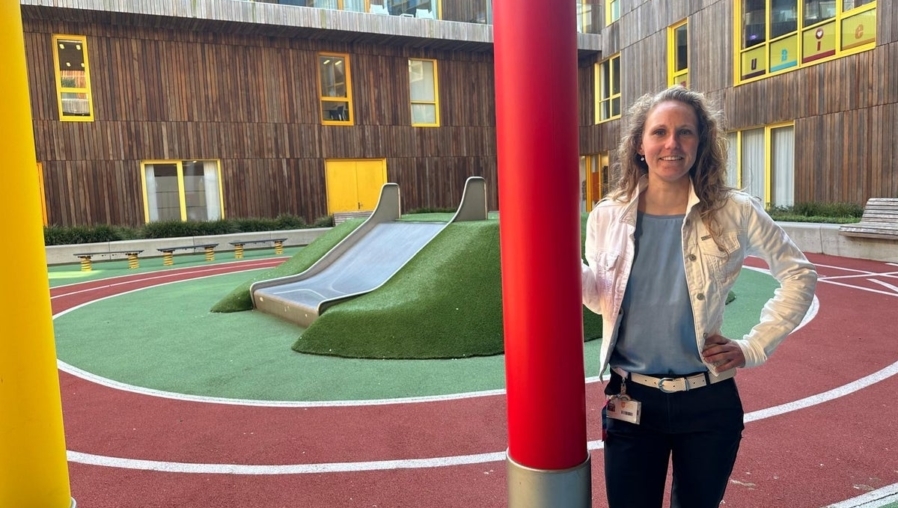
Children with cancer, including those diagnosed with acute lymphatic leukemia and those undergoing stem cell transplants, often face adverse effects of their disease and treatments. For example, with loss of muscle strength, pain (including bone pain), difficulty or inability to walk, fatigue and loss of appetite. PhD student Emma den Hartog mapped the physical functioning of children with cancer at the Princess Máxima Center. She defended her thesis on March 25.
In recent years, the chance of survival five years after a pediatric cancer diagnosis has increased to 84%. This is a major advance. More and more children with cancer are surviving, thanks to the good care at the Princess Máxima Center. However, they often have to deal with adverse effects of their illness and treatments. When the physical functioning of a child deteriorates and a child can no longer walk, for example, this has a great impact on their independence and ability to participate in daily activities such as going to school, playing outdoors and sports. These activities are important for a good quality of life. Therefore, it is important to be able to identify deterioration in physical functioning early.This is necessary to start interventions to improve their physical functioning, but how?
Research provides more insight
Emma: “The physiotherapists see that physical functioning deteriorates in children with cancer. At the Prinses Máxima Center, under the leadership of Emma Verwaaijen, Professor Wim Tissing and Professor Hanneke van Santen of the Prinses Máxima Center and UMC Utrecht, I was given the opportunity to conduct scientific research into this, so that we can gain more insight into the course of physical functioning in children with cancer and learn more about how to improve their physical functioning. How do these problems develop in the course of treatment? Which children are most at risk for reduced physical functioning? How can we identify problems in this area earlier?”
Knowing what your child is facing
How problems develop varies from child to child. “The research shows that 15 percent of children with acute lymphoblastic leukemia stop walking at diagnosis. And another 28 percent stop walking in the early treatment phase. “This is a very intense thing for both parents and children themselves to experience. Not being able to walk anymore can create uncertainty and social isolation,” Emma says. In certain groups, the risk was higher: “What stood out was that younger children, children who lost weight and children the long hospitalized during the first month of treatment had an increased risk,” says Emma. “But all of the children who participated in the study eventually regained their walking ability. These insights are helpful in being able to properly inform parents and children and guide them in what may await them. Together with the physical therapists, we created a video for parents with explanations and tips on exercise in children with cancer. The insights from the research can already be used to inform and support children and their parents.”
Emma also studied the physical performance of children who had to undergo a stem cell transplant. A stem cell transplant (SCT) is an intensive course of treatment that can be accompanied by complications that impair children’s physical performance. This form of therapy exists not only for cancer treatment, but also for other diseases, which are treated at the WKZ. “In Princess Máxima Center, we studied the physical performance of children 100 days after transplantation,” said Emma. “We saw that children 100 days after SCT had less muscle strength and muscle mass and performed physical tests more slowly than healthy peers. Children who were fitter before transplant also performed better afterwards. This correlation persisted regardless of age, amount of medication or length of hospitalizations.”
These insights will help develop an intervention to improve the physical performance of these children, both before and after an intensive course. A smartwatch could potentially play a role in this, but that will require follow-up research.
Developing a personalized approach
All of these insights combined will help provide children with cancer with a more personalized approach to reduce the negative effects of their disease and treatment and improve their physical functioning. This can help improve quality of life for children with cancer.”