The De Ridder group works on faster diagnosis of childhood cancer
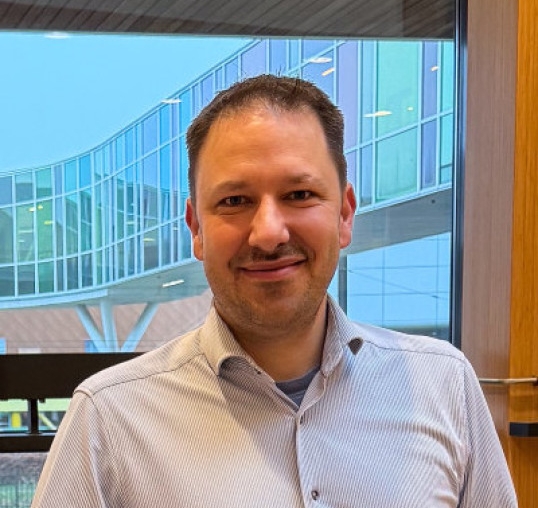
Prof. Dr. Jeroen de Ridder is the new head of a research group at the Princess Máxima Center. He is an expert in bioinformatics, a field that brings together biology, medicine, and computer science. His team uses artificial intelligence (AI) to quickly and accurately identify the type of cancer a child has. A correct diagnosis is important, because it allows children to receive the most appropriate treatment.
De Ridder previously collaborated with the Máxima Center. For example, he helped develop a method to recognize brain tumors in children more quickly. He now wants to apply this technique to other types of childhood cancer, such as leukemia, bone cancer, and neuroblastoma.
‘What attracted me to the Máxima Center is the open and collaborative atmosphere,’ says De Ridder. ‘That fits well with my group. Together with our new colleagues, we want to achieve results that matter for children with cancer.’
Thanks to new technologies, researchers can see more details of a tumor. However, the data are complex. De Ridder’s team develops smart software that helps physicians choose the right treatment.
De Ridder will also continue his research at UMC Utrecht, where he studies cancer in adults. He also works closely with colleagues at Utrecht Science Park. ‘I look forward to bringing together that knowledge and the support of AI with my team, and in doing so contributing to better care for children and adults with cancer.’
With the appointment of Professor Jeroen de Ridder as head of a research group, the Princess Máxima Center strengthens its expertise in artificial intelligence and molecular diagnostics. De Ridder’s research group, which is also affiliated with the Oncode Institute, develops smart algorithms that can analyze molecular data at great speed.
Prof. dr. René Medema, chief scientific officer of the Princess Máxima Center, says: ‘Jeroen de Ridder’s expertise in bioinformatics and artificial intelligence is a valuable addition to what we already have in house. Together, we can make even better use of our knowledge and technology to apply molecular data to diagnoses that enable the most appropriate treatment for childhood cancer. I am therefore very pleased to welcome him to the Máxima Center.’
Bioinformatics
De Ridder’s lab operates at the intersection of biology, medicine, and computer science. An important research area he will focus on is the application of AI to so-called molecular measurements. These techniques show in great detail how a tumor is structured. This characterization produces very large amounts of highly complex data. De Ridder says: ‘We design the analytical techniques that allow us to extract knowledge and insight from these data. The better we can map the tumor, the better the diagnosis.’
Strong collaboration within Utrecht Science Park
De Ridder will also remain affiliated with UMC Utrecht as head of a research group. ‘There are many overlaps between the adult cancer research I focus on at UMC Utrecht and research into childhood cancer. As a bioinformatician, the bridge lies in the DNA. I look forward to building that bridge together with experts from the Máxima Center and bringing it from the lab to the treatment room.’
In addition, De Ridder collaborates with peers at Utrecht Science Park. ‘I truly believe that in Utrecht we have created a unique situation: a very large number of leading researchers in a small area. This creates many opportunities to work together, for example through the Utrecht Bioinformatics Center (UBC) or the Utrecht AI labs that I already participate in. I strongly believe that together, with all our knowledge and the support of AI, we are going to make a difference for children with cancer.’