External review confirms strong research foundation at Veterinary Medicine
The Faculty of Veterinary Medicine at Utrecht University has a strong and coherent research foundation. Its research is internationally visible and societally relevant. This is confirmed by a recent evaluation by an external review committee. The final report also provides guidance for further strengthening the Faculty’s research.
The evaluation forms part of the national research assessment conducted under the Strategy Evaluation Protocol (SEP). Within this framework, independent committees periodically assess the research of Dutch universities. In this evaluation, the Faculty’s research over the period 2018–2024 was reviewed. The committee describes the Faculty as a vibrant and well-functioning research environment with strong scientific quality, clear societal relevance and a solid foundation for the future.
The two-day site visit by the external committee took place in November 2025 and followed an extensive self-assessment. During the visit, the committee assessed research quality, societal relevance, viability, Open Science, academic culture, PhD policy and training, and human resources policy.
Strong and coherent research profile
According to the committee, the Faculty has a strong and coherent research portfolio. Its research is highly visible internationally and widely cited. The committee particularly values the interdisciplinary collaboration within the themes of One Health, One Medicine and Veterinary Biomedicine, where fundamental, clinical and population-based research come together.
The committee also highlights the Faculty’s unique national position as the only place in the Netherlands where veterinary medicine is combined with biomedical and translational research. In this role, the Faculty contributes to connecting animal health, public health and broader societal challenges within the One Health domain. The Faculty’s strong embedding within Utrecht Science Park and its collaborations with partners such as UMC Utrecht and the Princess Máxima Center further strengthen the scientific position and societal impact of its research.
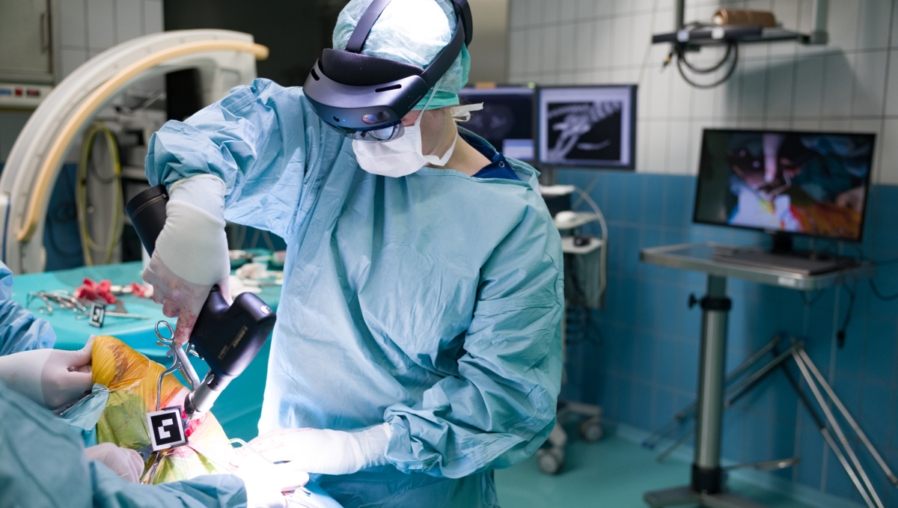
The societal impact of this research is also reflected in concrete innovations and contributions to urgent challenges affecting animals, humans and their shared environment. Researchers are, for example, working on organoid technologies, in which miniature organs are grown in the laboratory, contributing to innovations that reduce the need for animal testing. Researchers are also developing clinical applications, such as 3D-printed implants. In addition, they actively share their knowledge and expertise with partners, professionals and the wider public, for example on issues related to animal welfare and through clinical guidelines for veterinary practice.
Open Science firmly embedded
The committee also expresses appreciation for the Faculty’s commitment to Open Science: nearly all of the Faculty’s scientific publications are freely accessible. The committee further positively assesses the attention given to responsible data management and FAIR data principles.
The academic culture is described as open and collegial, with clear attention to social safety and to the supervision and development of researchers and PhD candidates.
“The report shows where our strengths lie and where we can continue to grow. The recommendations align well with the direction we have already set as a Faculty.” – Celia Berkers
Looking ahead with ambition
Alongside its positive assessment, the committee also provides several recommendations for the further development of the research. It advises the Faculty to continue clearly positioning its veterinary identity within the broader Life Sciences domain. The Faculty’s veterinary and comparative perspective is a key strength and makes it a valued partner in international One Health research. In addition, the committee stresses the importance of strengthening engagement with stakeholders such as practising veterinarians and policymakers.
In the coming years, the Faculty also aims to further strengthen strategic collaborations with partners such as Wageningen University & Research, the National Institute for Public Health and the Environment (RIVM), and other societal organisations, particularly around themes such as zoonoses, food safety and sustainable livestock farming.
The planned new Faculty building at Utrecht Science Park will play an important role. According to the committee, the new facilities could act as a crucial catalyst for strengthening the Faculty’s veterinary profile and for enhancing collaboration between research, education and clinical care. Internationally, the Faculty seeks to strengthen its role by actively contributing to European research agendas and collaborations within international research partnerships on animal health, public health and One Health.
According to Vice-Dean for Research Celia Berkers, the report provides a valuable basis for the future: “The report shows where our strengths lie and where we can continue to grow. The recommendations align well with the direction we have already set as a Faculty.” Looking ahead, the Faculty will continue to build on the One Health approach by exploring how research on animal, human and environmental health can be more closely connected to global challenges related to sustainability and planetary health.
In the coming period, the Faculty will translate the committee’s recommendations into concrete actions.