ALS gene discovery forms basis for treatment development
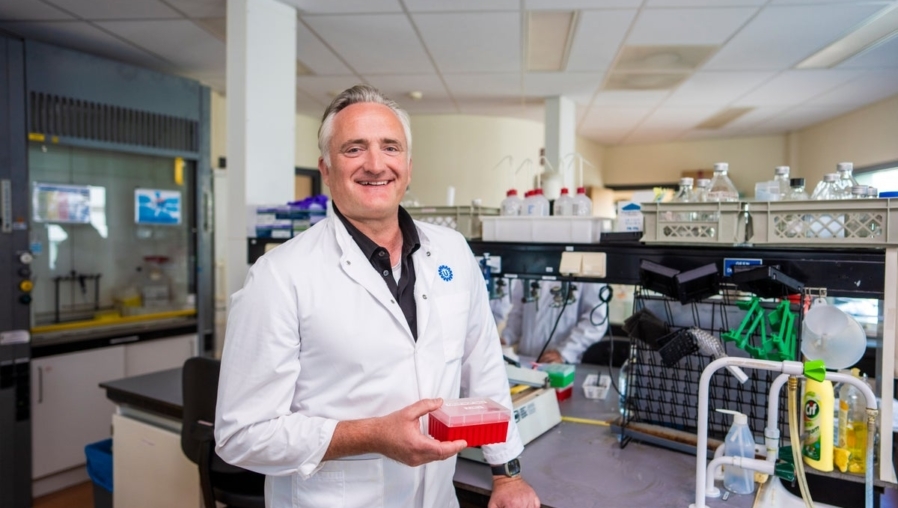
Researchers at UMC Utrecht’s ALS Center have found new genetic abnormalities that play a role in the development of ALS. As a result, the group of patients in whom the cause of the nerve and muscle disease can be pinpointed has grown from 20 to 25 percent. The finding also helps to better understand ALS and may eventually contribute to the development of targeted treatments for some of the patients.
Researchers at UMC Utrecht’s ALS Center have found new genetic abnormalities that play a role in the development of ALS. As a result, the group of patients in whom the cause of the nerve and muscle disease can be pinpointed has grown from 20 to 25 percent. The finding also helps to better understand ALS and may eventually contribute to the development of targeted treatments for some of the patients.
The results of the study were published today in the scientific journal Nature Genetics and are part of the international research program Project MinE. “This finding does not mean there will be a cure tomorrow, but it does give us direction for follow-up research,” said Professor of Neurology and Neurogenetics Jan Veldink, principal investigator of Project MinE.
For the study, the researchers analyzed the DNA of nearly 18,000 people with ALS and more than 200,000 people without the disease. They found several genetic abnormalities associated with an increased risk of ALS, including in the ARPP21 gene. This provides leads for new treatments.
GoALS, a multi-year research program of which Project MinE is a part, is working on new drugs. The expectation is that it will certainly be several years before it could be that far. Veldink: “We are now getting down to work, together with other parties, to develop potential gene therapies.”
Familial and sporadic ALS explained
Every year, about 500 people are diagnosed with ALS in the Netherlands. ALS has two variants: familial and sporadic. Familial means that there are several people with ALS in the family and therefore there is a strong suspicion that the patient has an abnormal gene that has caused the disease. In sporadic ALS, genetic abnormalities also occur, but environmental factors may also play a role. One in 10 people with ALS has the hereditary form; 90 percent have the sporadic form of ALS. At least 25 percent of all people with ALS, regardless of whether the disease runs in the family, have a DNA abnormality.
For most people with ALS, there is no treatment yet. In 2022, the drug QALSODY, also known as Tofersen, represented the first breakthrough in the treatment of a genetic form of ALS. This drug works for people with ALS with a rare abnormality in the SOD1 gene. In the Netherlands, this is only one percent of patients.
The drug is a so-called “antisense oligonucleotide,” a piece of artificial hereditary material that reduces the production of the pathogenic SOD1 protein. The drug can thus inhibit the disease and, in some cases, even improve muscle strength. The hope is that new gene therapies with antisense oligonucleotides can now be developed for the newly discovered genetic variations.