A dry summer calls for smart solutions: the role of HU research
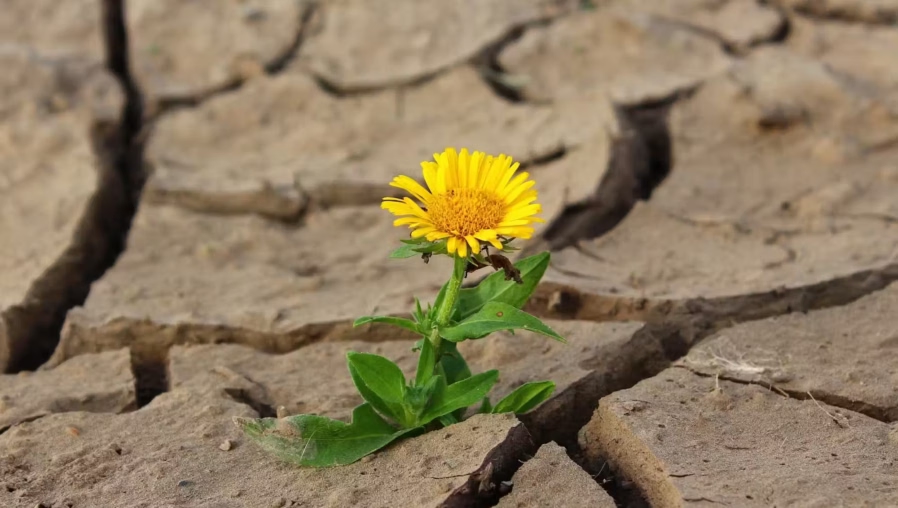
It cannot have escaped anyone’s notice: the summer of 2026 is exceptionally hot and dry. The media have been reporting on all the consequences. Roberta Hofman-Caris, Professor of Innovative Water Systems at HU University of Applied Sciences Utrecht, outlines how practice-oriented research and education at HU are contributing to solutions for the problems of, well, not tomorrow, but today.
This year is threatening to become just as dry as the record year of 1976, and perhaps even drier. Houseboats are left stranded on dry ground, freight transport on the major rivers has to be restricted because water levels are too low, and houses are subsiding due to falling groundwater levels. Agricultural crops are crying out for rain, while nature is struggling. On July 12, Harold van Waveren, chairman of the National Coordination Committee for Water Distribution (LCW), warned of a water shortage. He emphasized that we need to make choices.
Playing with water
At HU University of Applied Sciences Utrecht, the challenges surrounding water shortages are explored in the Water Technology minor. This is done using a serious game developed by RIWA Maas, particularly by Maarten van der Ploeg. The playing field is a map of the Meuse river basin, covering France, Wallonia, Flanders, the Netherlands and Germany. Each player is assigned a specific area. They must distribute the water available in the Meuse among all the different uses: industry, cooling nuclear power plants, agriculture, recreation, drinking water production, and so on.
At first, it seems that there is enough water available. It quickly becomes clear, however, that countries tend to secure their own needs first, creating problems for people further downstream, especially when incidents such as drought or excessive rainfall occur. The game quickly makes it clear what challenges are at stake and how complicated it is to arrive at effective solutions. The students then put this knowledge into practice in the minor by designing a new water treatment system for an area facing water shortages.
In green neighbourhoods
This is just one of the ways HU is addressing water-related challenges. To combat heat stress, it is also important to introduce sufficient greenery into neighbourhoods. Green roofs and façades can play an important role, but this vegetation needs enough water. Increasing drought as a result of climate change is not the only challenge. Dry periods are increasingly being alternated with extreme rainfall, which can cause significant flooding.
It is therefore important to develop ways of collecting and storing water available in residential areas. This applies not only to rainwater from heavy rainfall, but also to greywater: lightly contaminated wastewater from sources such as showers, washing machines and kitchens. If we can reuse this water, for example to provide sufficient water for urban greenery, we can tackle two problems at once. We can reduce flooding while also mitigating the effects of heat and drought.
Together with the new Cartesius neighbourhood, HU is participating in research into these kinds of solutions through a newly awarded EU Horizon project, RENEW Futures. Eighteen European institutions are collaborating on the project to design new residential neighbourhoods and buildings in which water plays a central role.
190 tonnes of non-degradable residues
People use roughly the same amount of medicines and personal care products during dry and wet periods. Many of these substances end up in wastewater treatment plants through wastewater. However, most treatment plants are not designed to remove these substances from the water. The Dutch National Institute for Public Health and the Environment (RIVM) calculated that at least 190 tonnes of non-degradable pharmaceutical residues enter surface water in the Netherlands every year.
When water levels are low during periods of drought, their concentration in rivers increases, with consequences for life in those rivers. HU collaborates with the Hoogheemraadschap De Stichtse Rijnlanden water authority in several areas, including research into how wastewater can be treated more effectively to reduce these concentrations.
We have never had it this salty…
Around 40% of our drinking water is extracted from surface water, which must undergo extensive treatment before it can be used. Higher concentrations of pollutants in rivers therefore also affect drinking water companies.
And what about drinking water companies that primarily use groundwater? They are also affected by increasing drought. First of all, because groundwater levels fall during dry periods. But also because increasingly large amounts of salt enter the water as water levels drop.
Vitens, the largest drinking water company in the Netherlands, is therefore working to supplement its groundwater supply with surface water from the IJssel. HU is also closely involved in research related to developments such as these.
More than awareness
The current drought clearly demonstrates the relevance of HU’s water research. But it also highlights how important it is for our education to prepare professionals who are not only aware of water-related challenges, but are also capable of developing solutions to address them.
Roberta Hofman-Caris
Professor of Innovative Water Systems, HU University of Applied Sciences Utrecht
Want to learn more about water research at HU? Visit hu.nl/water.